Retail & E-commerce
Multi-vendor marketplace platform
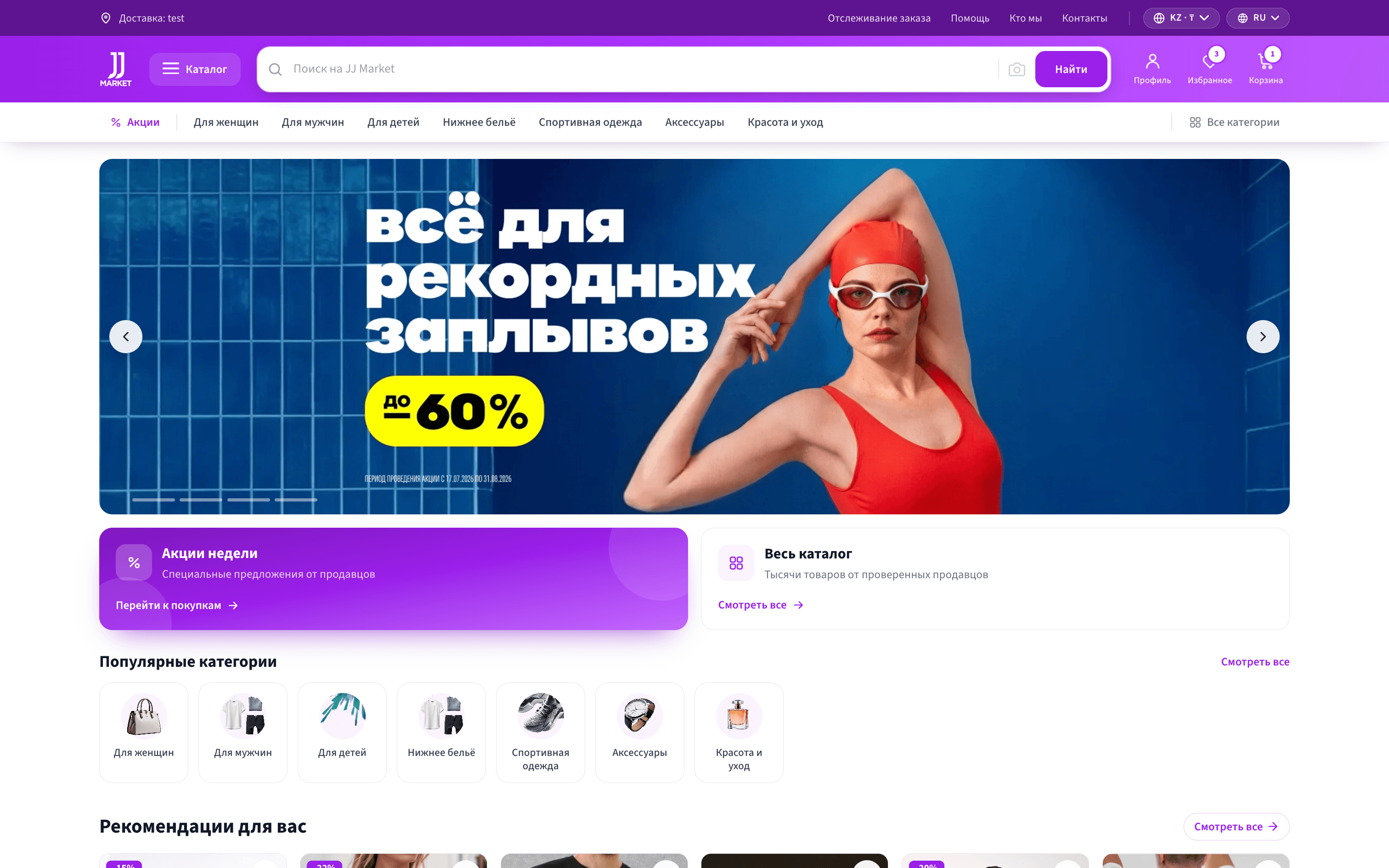
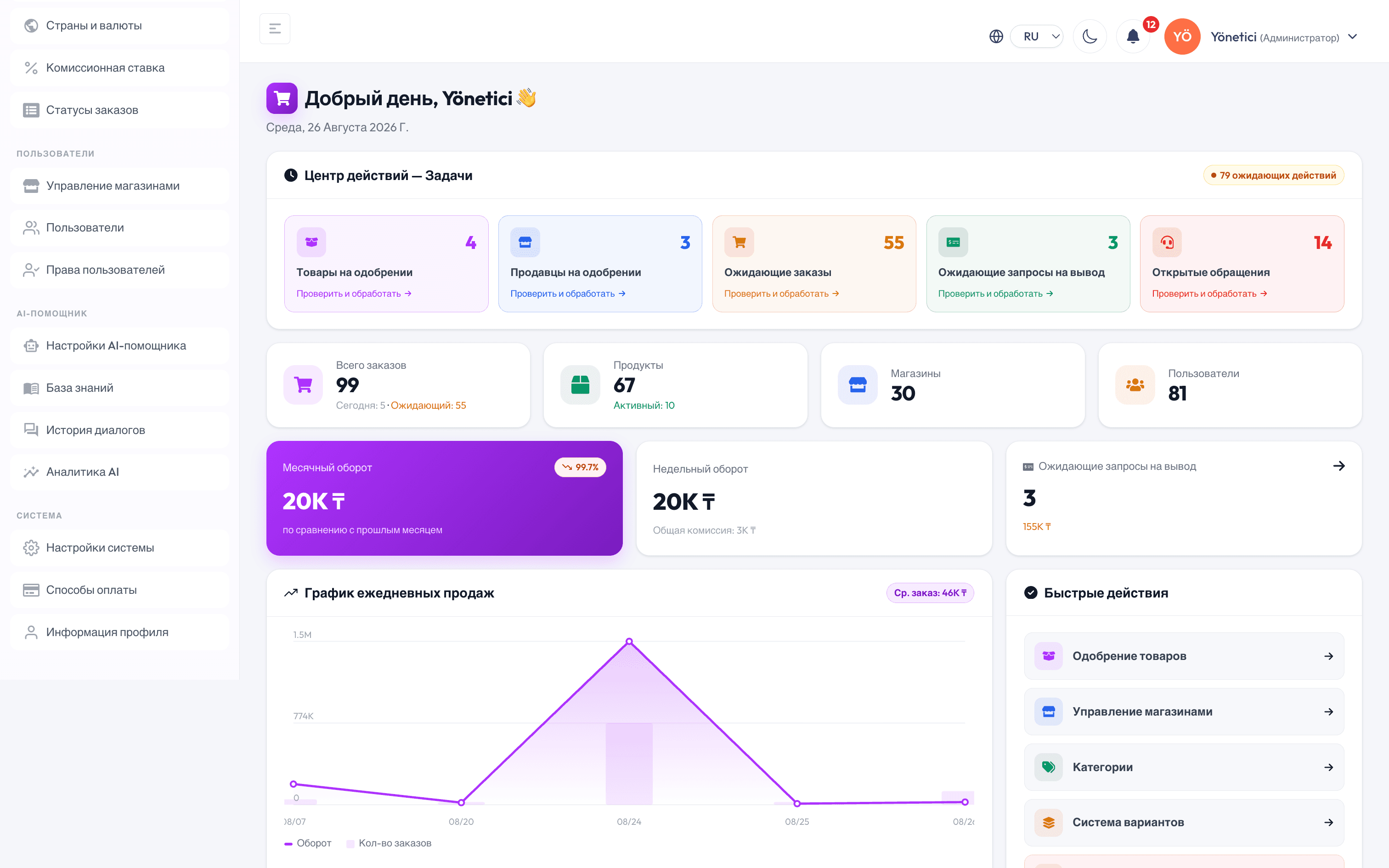
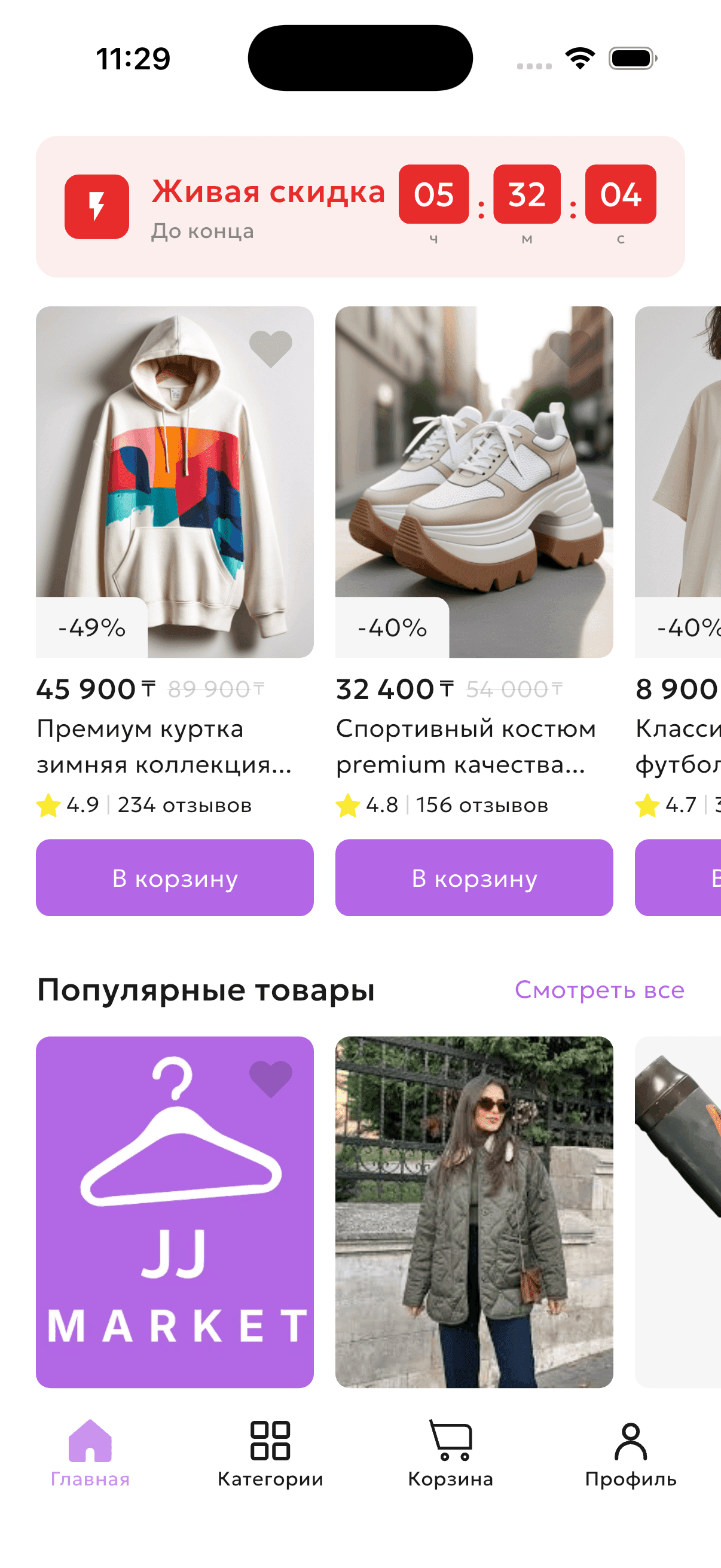
A multi-vendor commerce platform built from scratch for the Kazakh market: three web applications — customer storefront, seller panel and admin panel — plus two mobile apps, one for sellers and one for customers. All of it live in Russian, Turkish and English.

- customer · seller · admin
- 3 panelcustomer · seller · admin
- seller and customer apps
- iOS · Androidseller and customer apps
- live in three languages
- RU · TR · ENlive in three languages
In short
How do you build a multi-vendor marketplace?
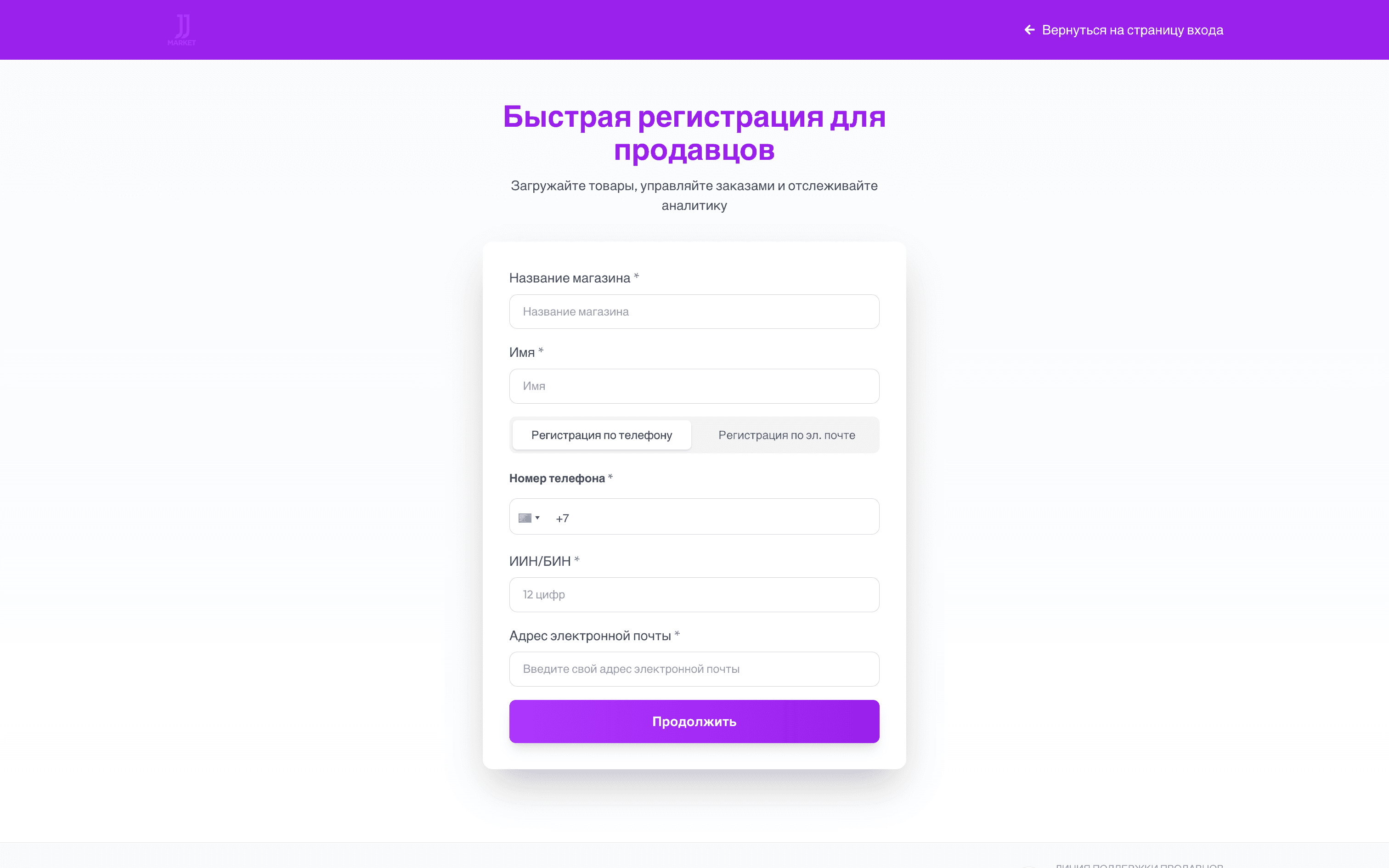
Neuros solved the marketplace by putting three panels on one API: customer, seller and operations connect to the same catalogue, order and payment services with different permissions. A seller moves from application to dashboard in a single flow and signs in with phone verification. Multilingual support went beyond interface text — the category tree, contracts and product records are held in Russian, Turkish and English.
01Challenge
A marketplace is not one product but three connected ones: the customer who shops, the seller who uploads stock and works their orders, and the operations team that moderates catalogue, sellers and orders. All three read the same catalogue and order data, and none of them can share a screen. On top of that the market is multilingual — the same product record has to live with its Russian, Turkish and English versions.
02Approach
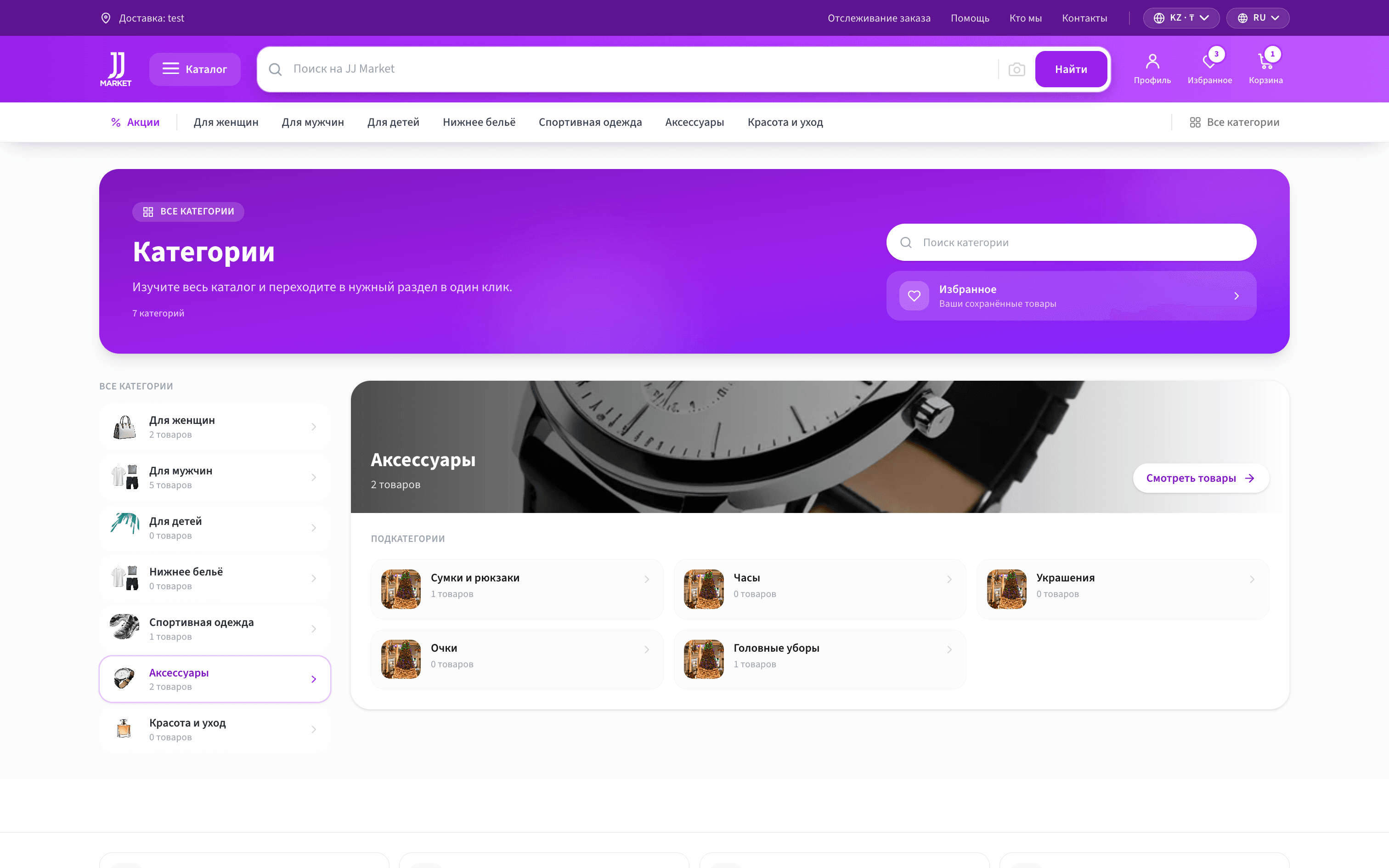
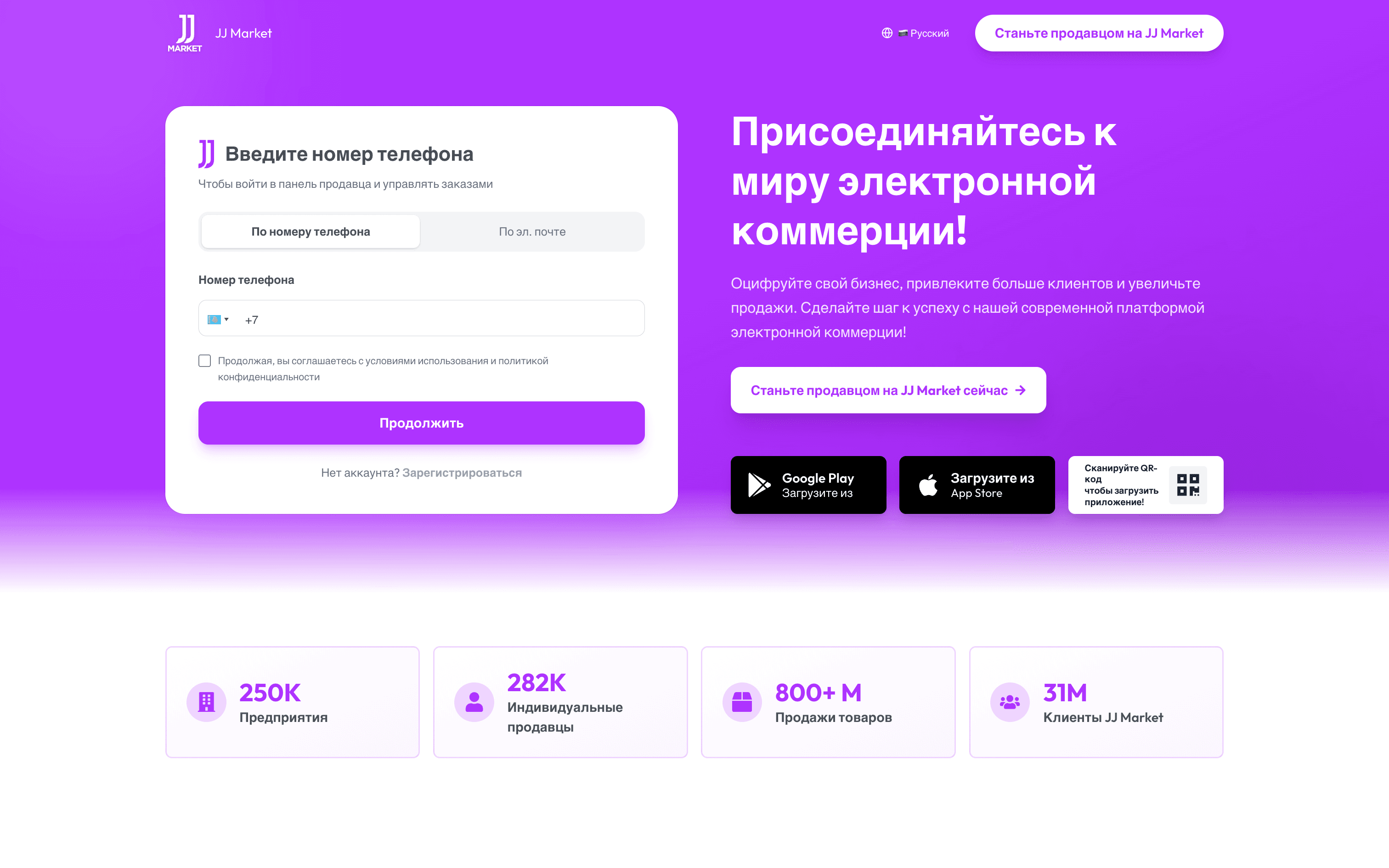
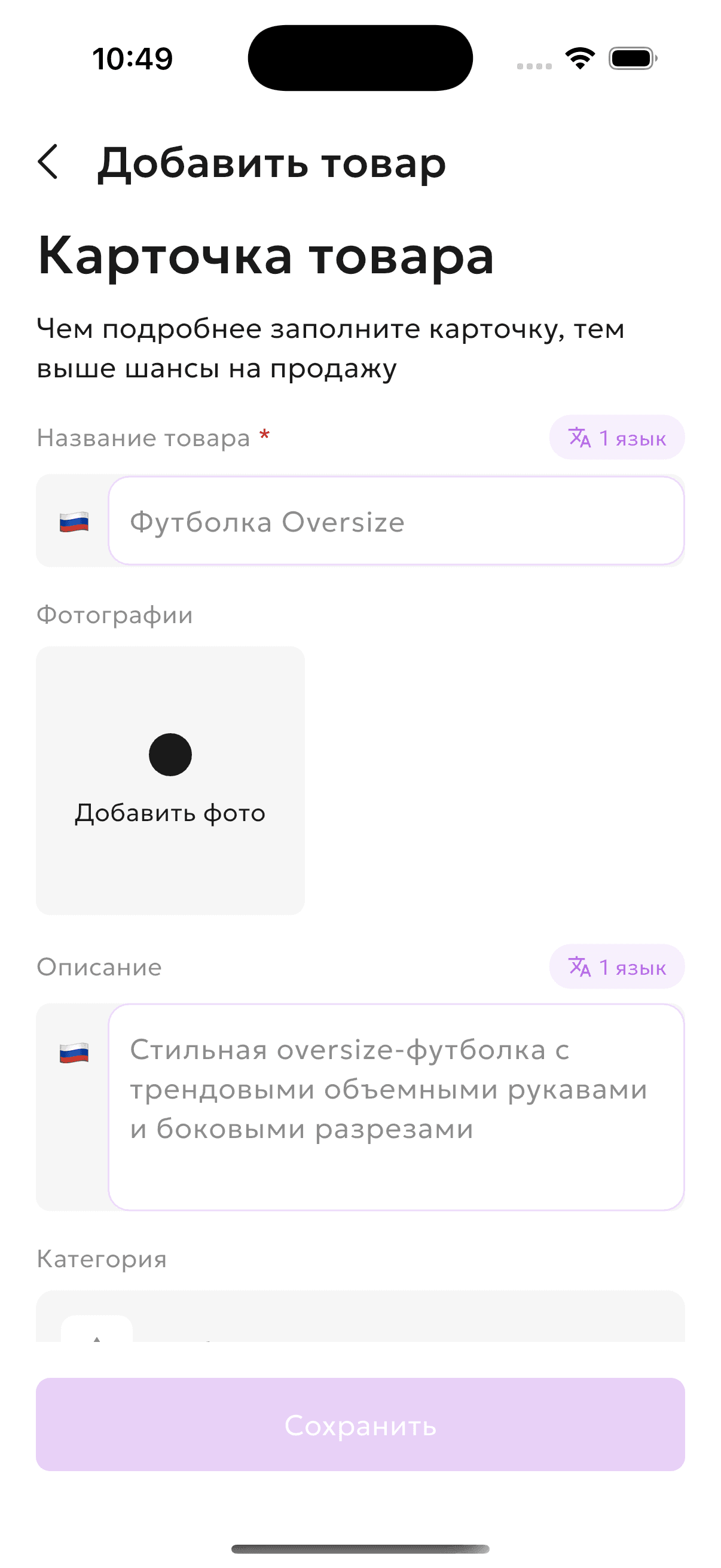
Catalogue, orders, payments and seller data sit behind one API, and all three panels connect to the same service with different permissions. The seller side runs as a single flow from application form to panel, with sign-in by phone number and verification code. Language support goes beyond interface strings: the category tree, the legal contract pages and the product record itself all change with the language — the seller fills the product card once per language. The seller and customer mobile apps talk to the same API — there is no second data model.
03Outcome
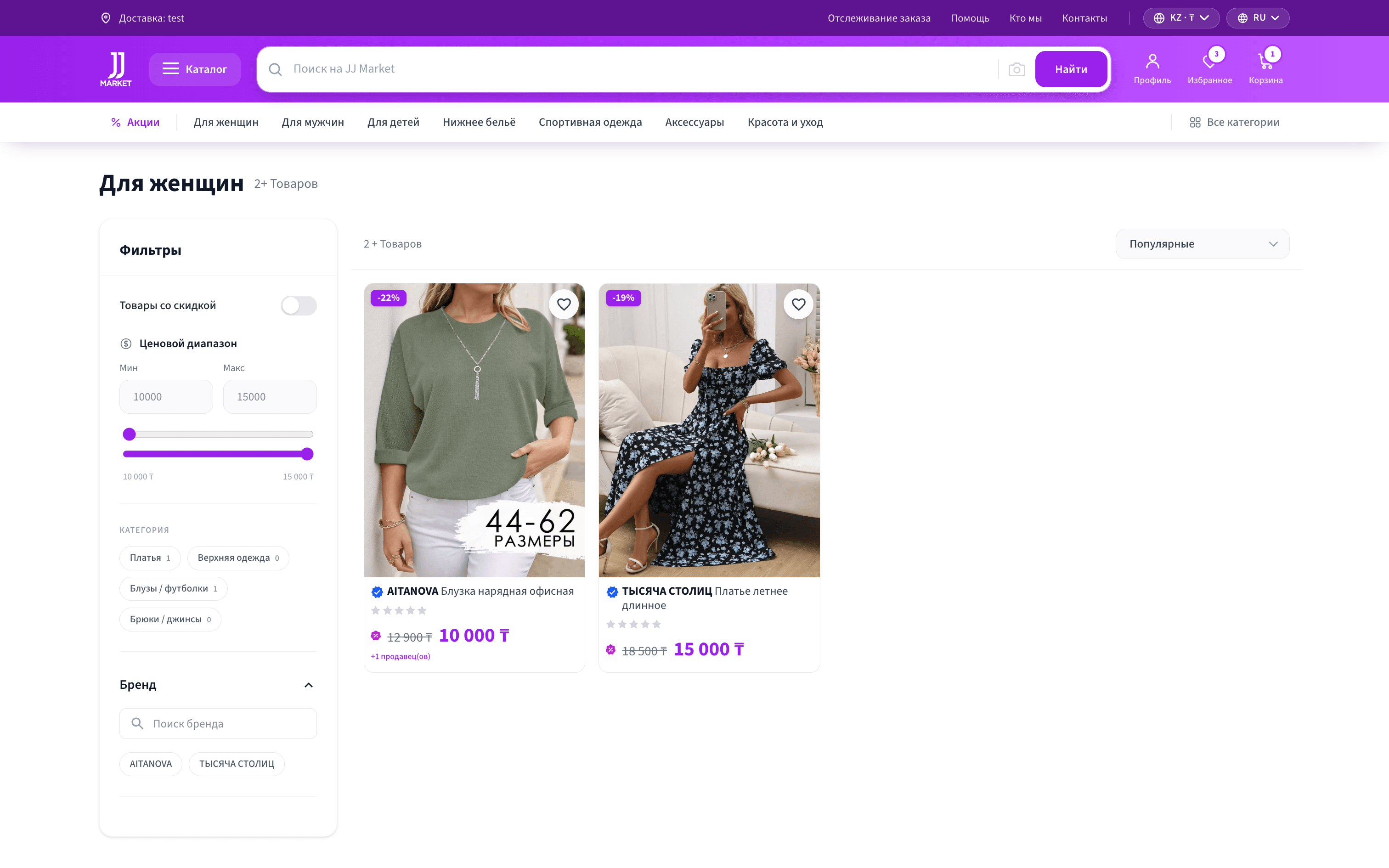
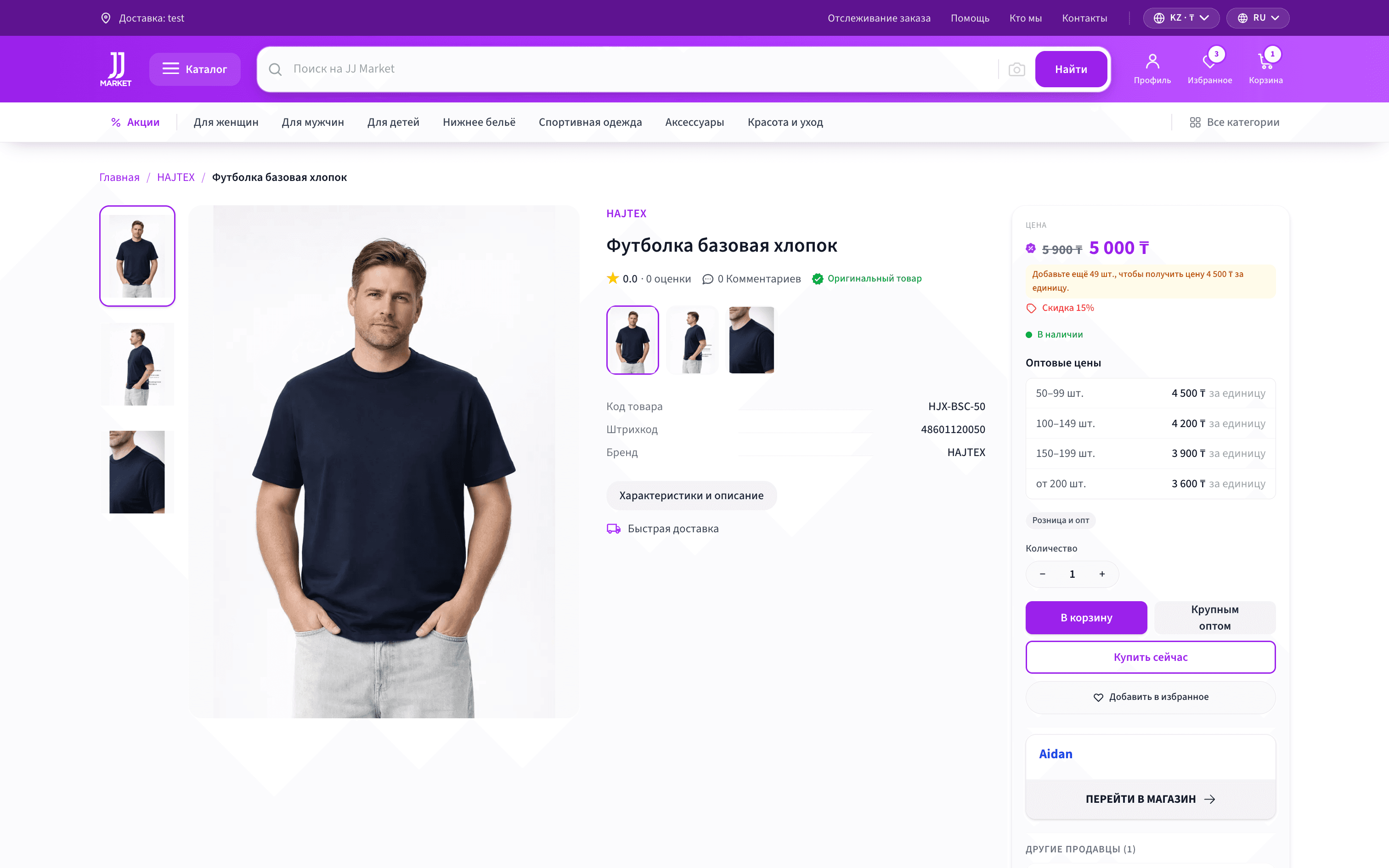
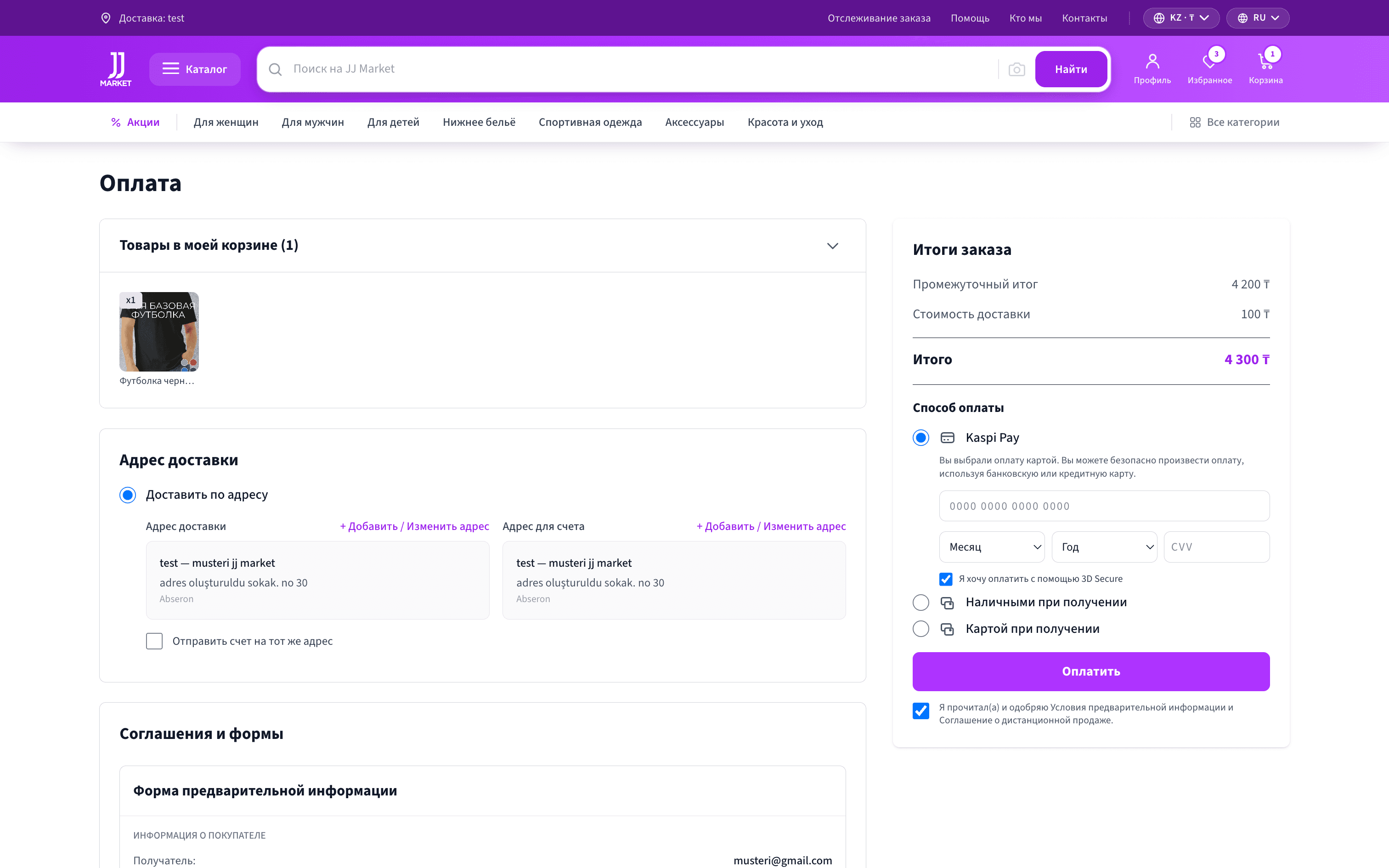
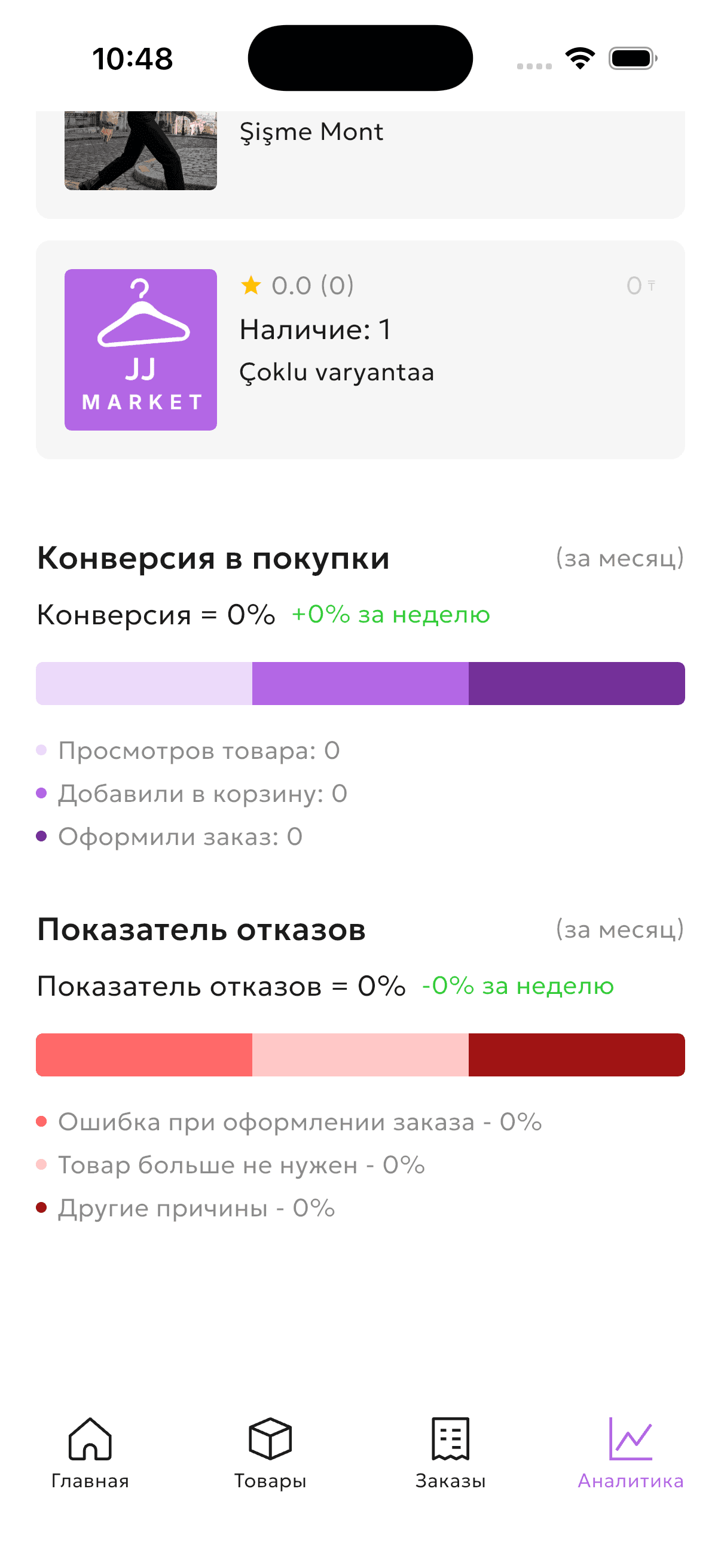
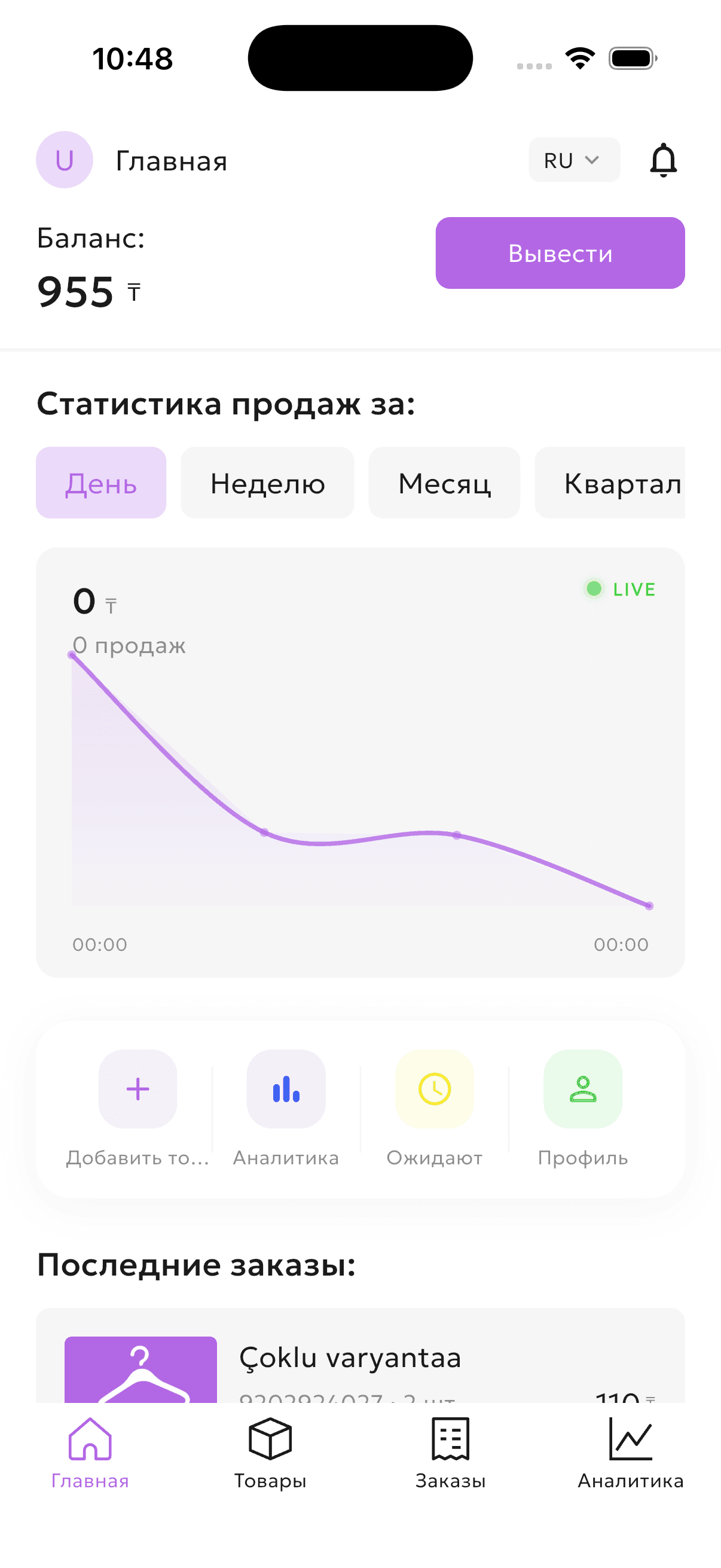
A seller files an application, opens their store, and runs stock, orders, revenue and payouts from the panel or from their phone — purchase conversion and drop-off reasons sit on the same screen. On the customer side the category tree, filters, search, favourites, cart, checkout and order tracking are all live, and operations sees the same data from the admin panel.
Technology stack
- 01React
- 02Redux
- 03Node.js
- 04Express
Web screens
- 01
- 02
- 03
- 04
- 05
- 06
- 07
- 08
Mobile screens
- 01

- 02
- 03
- 04
- 05
In this project yes, because the two jobs differ. A customer searches, compares and buys; a seller uploads products, manages orders and watches revenue. Compressing both into one app slows the primary flow for each. As long as the data layer stays shared, separate interfaces are a correct separation rather than duplication.
Every product record carries separate fields per language; translation lives in the data layer, not the interface layer. A seller enters the product in their own language, missing languages are flagged in the dashboard, and the item stays out of that language's storefront until completed. The category tree and contract texts follow the same rule, so a customer switching language never meets a half-translated page.
Your problem could be the next one here
If you're facing something similar, we'll walk you through how we'd approach it on the first call.